Japanese Shelf Decor Ideas for a Calm Home
Japanese shelf decor works best when the shelf still has air around each object. Choose one anchor piece, repeat natural materials, leave open space, and mix useful objects with one quiet visual accent. A shelf should feel collected over time, not filled in a single shopping trip.
What makes Japanese shelf decor feel calm?
Calm Japanese shelf decor is based on spacing, material, and restraint. Current 2026 interiors coverage continues to favor natural materials, handmade detail, warm neutrals, and objects with personal meaning, which fits Japanese craft better than a crowded theme. Start by removing half the small items on the shelf, then choose one object to lead the arrangement: a porcelain koro, a yunomi, a fan, a small textile, or a book stack. Give that object enough empty space to be seen from across the room. The result should support the room's use, whether the shelf sits in a living room, tea corner, entryway, or bedroom. The point is not to copy a display alcove exactly. It is to make one ordinary shelf quieter, more useful, and easier to reset.
What should be the anchor object?
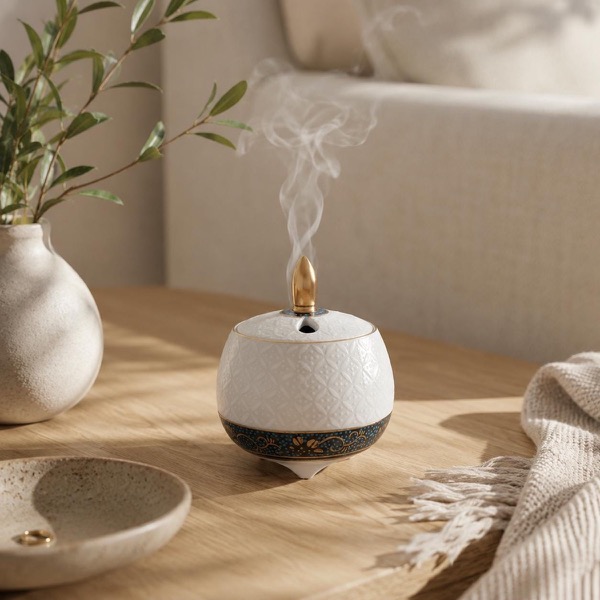
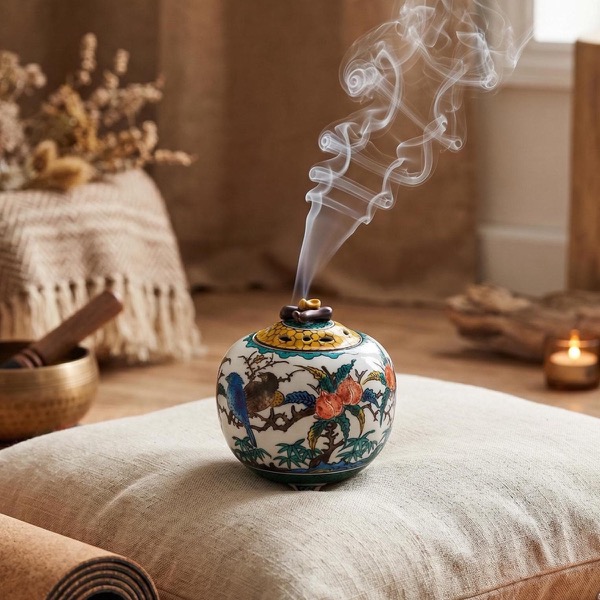
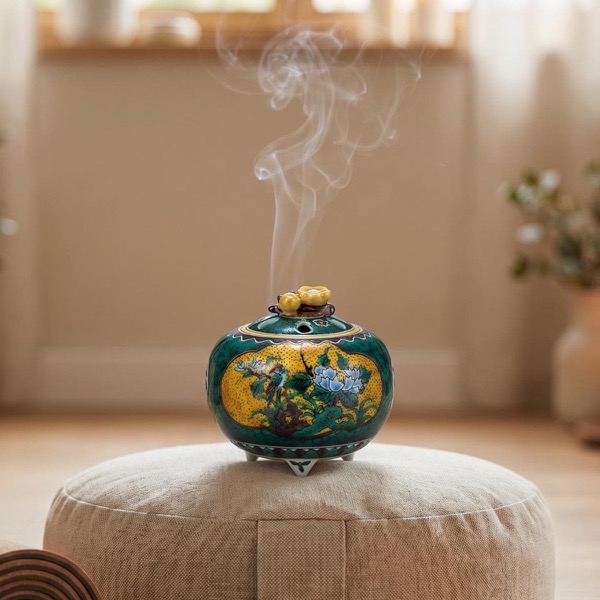
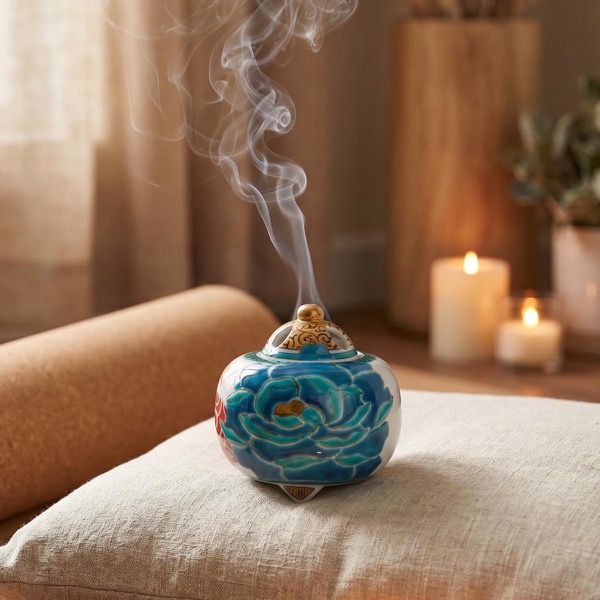
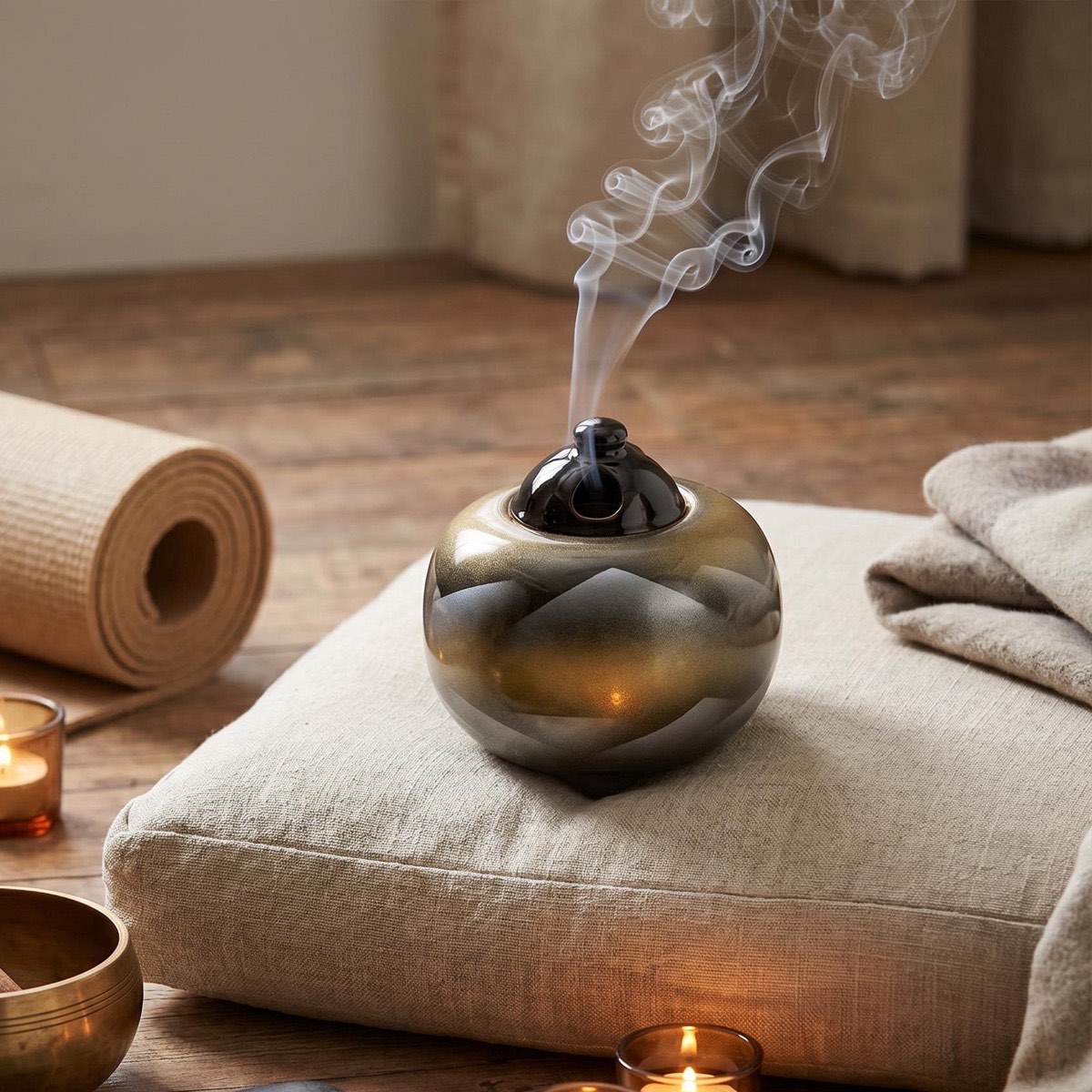
The anchor object should be the piece with the clearest form or daily use. A Kutani koro works well because it has height, a lid, and a finished silhouette even when no incense is burning. Kutani ware is overglaze-painted porcelain from Ishikawa Prefecture, first fired in 1655, and the classic gosai palette uses green, blue, yellow, purple, and red. On a shelf, that craft history reads through shape and hand-painted detail rather than through size. Browse the Japanese incense collection or read what Kutani ware is before choosing the visual anchor.
How many objects belong on one shelf?
Most shelves need fewer objects than people expect. For a narrow shelf, use three elements: one anchor, one lower companion, and one soft background such as a book or textile. For a wider shelf, build two small groups instead of one long line. Leave at least a hand-width of clear space between groups when possible. Avoid placing every Japanese category together on the same level. A koro, fan, yunomi, noren, incense box, and wall hanging can each be beautiful, but all together they turn into inventory. A better shelf has a clear first read from the doorway and a second detail when someone comes closer. That two-step rhythm keeps handmade objects from becoming clutter.
Can tea cups be used as shelf decor?
Tea cups can be used as shelf decor when they still look ready for use. A yunomi is compact because it has no handle, and current NeoiAtelier tea cup listings include practical capacities such as 270 ml, 325 ml, and 385 ml. Place one cup on a tray, beside tea, or near a small stack of books, then leave the rim clear. Do not fill it with unrelated objects if you want it to remain a living piece of craft. Compare options in the Japanese tea cups collection and the guide to what a yunomi is.
Where do fans and textiles fit?
Fans and textiles fit best as background shape, not tabletop clutter. A linen uchiwa fan can lean behind a lower object, hang beside the shelf, or sit on a simple stand if the shelf is deep enough. A narrow textile or noren can soften the wall behind open shelving, hide storage nearby, or add a vertical line beside a cabinet. Keep flat pieces away from heat, smoke, and damp surfaces. For lightweight accents, see the Japanese fan wall decor collection and the noren and textile collection.
How do you style incense safely on a shelf?
Style incense as an object first and a burning ritual second. A koro can sit on a shelf as porcelain art, but burning incense needs a stable, heat-resistant surface, ventilation, and full attention. Keep it away from books, paper, curtains, wall textiles, plants, children, pets, and any shelf above it. If the shelf is narrow or enclosed, burn incense elsewhere, let the burner cool fully, then return it to the display. For placement basics, use the guide to where to place an incense burner at home before treating scent as part of the room.
How do you avoid a themed souvenir look?
Avoid a themed souvenir look by limiting motifs and repeating materials instead. Choose one painted porcelain piece, one textile texture, or one bamboo shape as the lead. Then let surrounding objects stay simple: books, a wood tray, a small lamp, or a plain ceramic dish. Do not combine too many symbols, colors, and pattern scales on one shelf. A white shippo koro, a natural linen fan, and a pale book spine will feel calmer than five bright motif pieces competing for attention. Every NeoiAtelier piece is made in Japan and ships from Osaka, but the shelf does not need to announce that fact loudly. Good curation lets the material quality carry the story.
What is a simple shelf gift combination?
A simple shelf gift combination is one anchor piece plus one useful companion. Choose a small Kutani koro with low-smoke incense for someone who already enjoys scent, a yunomi with tea for a compact tea shelf, or a linen fan with a wall hook for a renter-friendly accent. Keep the gift easy to place in a real home, not dependent on a full room redesign. For broader browsing, compare the Japanese gifts collection with Japanese gifts under $150, then choose by the recipient's shelf depth, room use, and tolerance for maintenance.