What Is a Yunomi? The Everyday Japanese Tea Cup, Explained
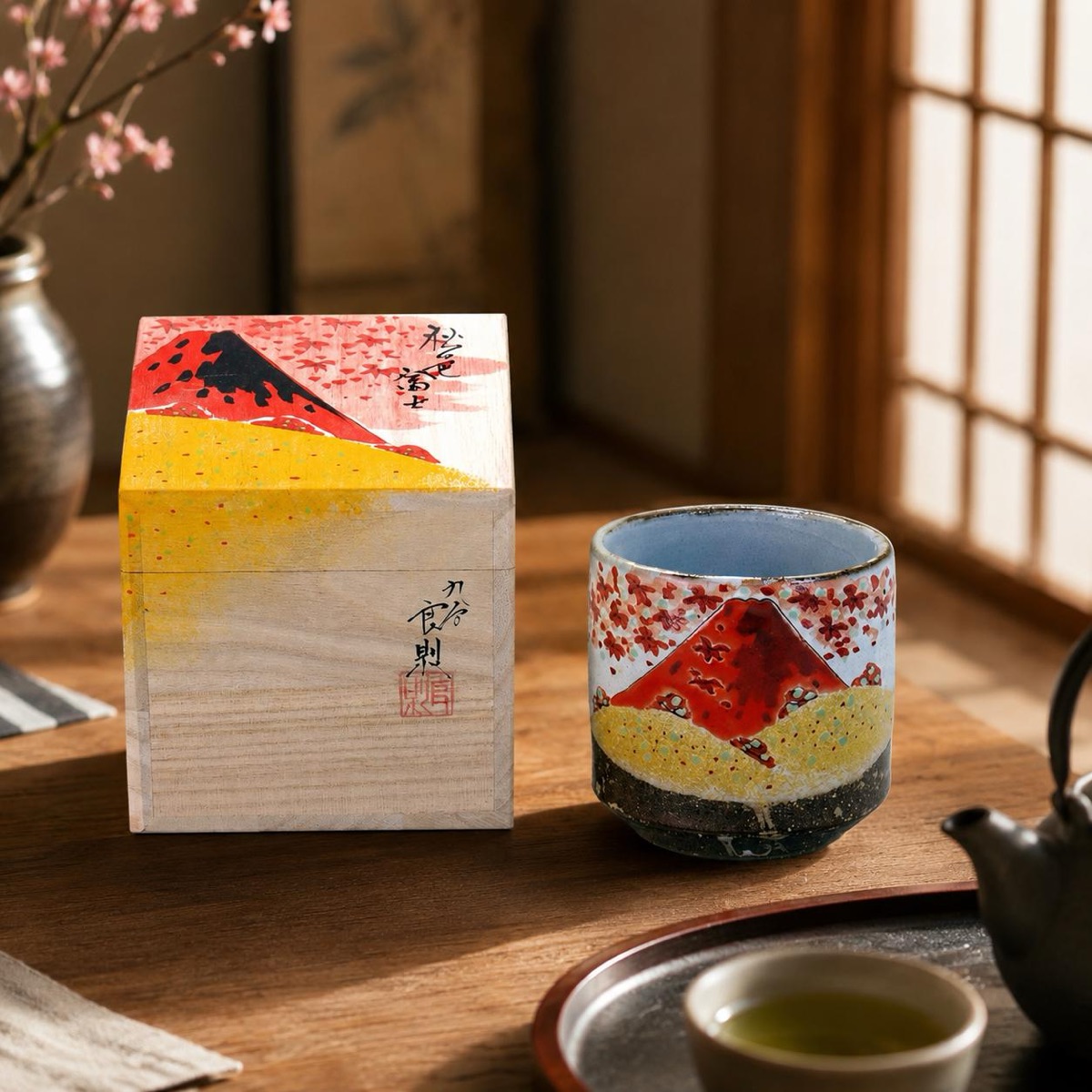
A yunomi is the everyday Japanese tea cup: a tall, handleless cup, taller than it is wide, used for green tea at home and at the table. Unlike the broad chawan of the formal tea ceremony, a yunomi is made for daily, casual drinking — cradled in both hands, warm against the palms.
What is the difference between a yunomi and a chawan?
The difference is purpose and shape. A yunomi is the cup of daily life: tall and narrow, sized for a single serving of brewed green tea, and used at the kitchen table or the office desk. A chawan is the wide, shallow bowl of the tea ceremony, made for whisking matcha rather than pouring sencha. Both are handleless and held in two hands, but a yunomi keeps tea hot a little longer thanks to its height, while a chawan opens the matcha to the air. In a Japanese home you reach for a yunomi every day; the chawan comes out for ceremony.
How is a yunomi different from a Western teacup?
A yunomi has no handle and no saucer. Where a Western cup is wide and short with a looped handle for hot black tea or coffee, a yunomi is taller, narrower, and meant to be held directly — the warmth of the cup is part of the experience. It is sized for Japanese green tea, which is brewed cooler than black tea, so a handleless cup stays comfortable in the hand. Yunomi are often bought singly, or as a meoto pair (a larger cup and a smaller one), rather than in matching sets of six.
What is Kutani ware?
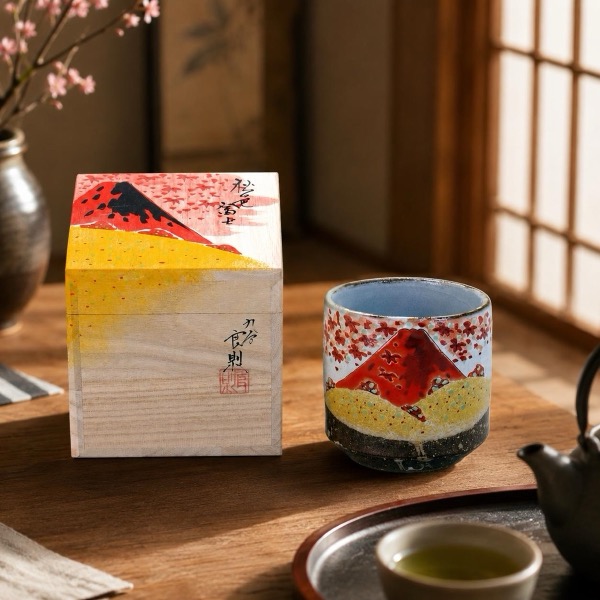
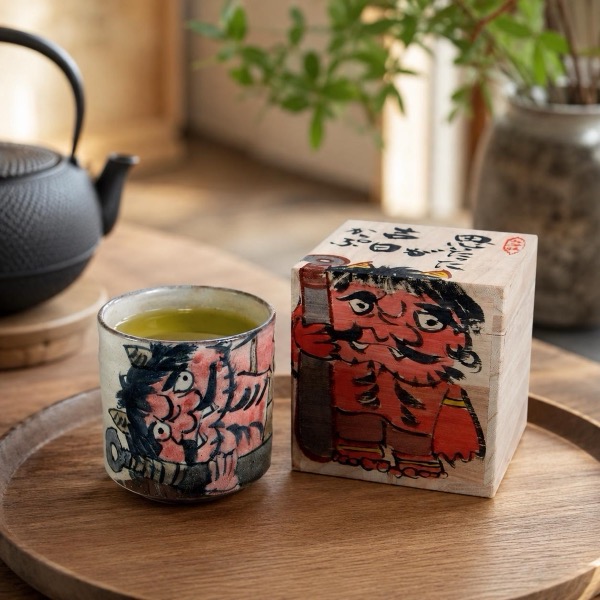
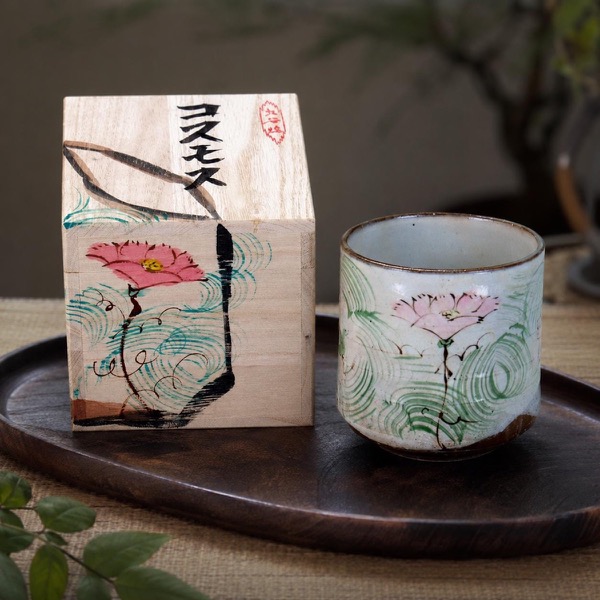
Kutani ware (Kutani-yaki) is the painted porcelain of Ishikawa Prefecture, first fired around 1655. It is known for bold overglaze enamel painting in the five classic colors, the gosai — green, blue, yellow, purple and red — laid thickly over the glaze so the color sits like jewelry on the surface. A Kutani yunomi is therefore two things at once: a functional tea cup and a small hand-painted canvas. The same tradition produces the burners in our Kutani koro collection; on a tea cup, that painting wraps the body in scenes of Mt Fuji, cosmos and seasonal birds. Every cup in our Kutani yunomi collection is hand-painted by studio artisans in Japan.
What makes a good Kutani yunomi?
Look first at the painting and the porcelain. A good yunomi has crisp, confident brushwork — the gosai enamels clean, the gold, if any, evenly applied. The body should feel balanced in the hand, neither too heavy nor too thin at the rim, and the foot should sit flat. Size matters too: most yunomi hold between nine and thirteen ounces, enough for a generous cup of sencha. Because each piece is hand-painted, small variations from cup to cup are normal and prized — the mark of a hand, not a machine. A signed base, as on the hand-painted Mt Fuji yunomi by Master Fukuda, points to a specific studio and maker.
What tea do you drink from a yunomi?
A yunomi is built for Japanese green tea — sencha, genmaicha, hojicha or bancha. These teas are steeped at lower temperatures than black tea, around 70 to 80 degrees Celsius, which is why a handleless cup is comfortable to hold. Pour the cup about two-thirds full so there is room to cradle it, and drink while it is hot. Green tea is the tradition, but a yunomi works just as well for any everyday tea you would otherwise take without milk.
How do you care for a Kutani yunomi?
Treat the surface as you would a painting. Wash by hand with warm water and a soft cloth, and skip the dishwasher and abrasive scrubbers — the overglaze enamels and gold accents sit on top of the glaze and can wear under harsh cleaning. Avoid sudden temperature shocks, such as pouring boiling water into a cold cup. Cared for gently, a Kutani yunomi lasts for decades and grows more characterful with daily use.
Do Kutani yunomi make good gifts?
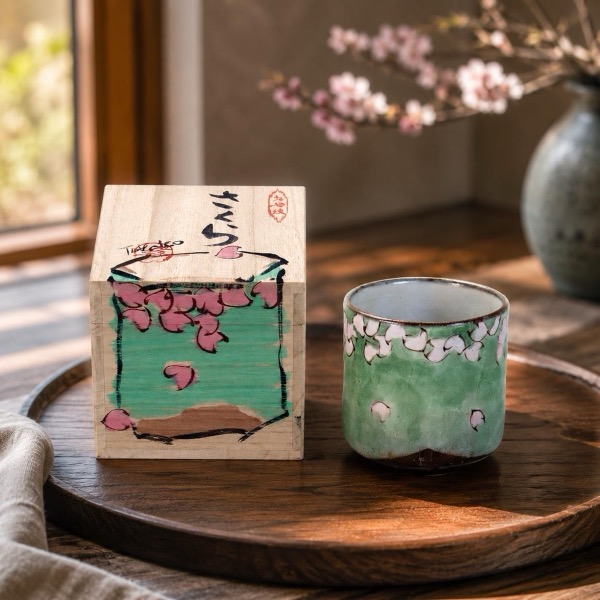
They are among the most giftable pieces of Japanese craft: useful, collectible and personal. Each cup arrives in a wooden box, and the painted motifs carry quiet meaning — an owl (fukuro) for wisdom and good fortune, sakura for spring, hanafuda flowers for the twelve months — so you can match the design to the person. They suit housewarmings, Father's Day, or anyone who takes their tea seriously. See the full range, with the meaning behind each motif, in our Kutani tea cup collection, and more pairing ideas in our Japanese gift guide.