How to Care for a Linen Noren
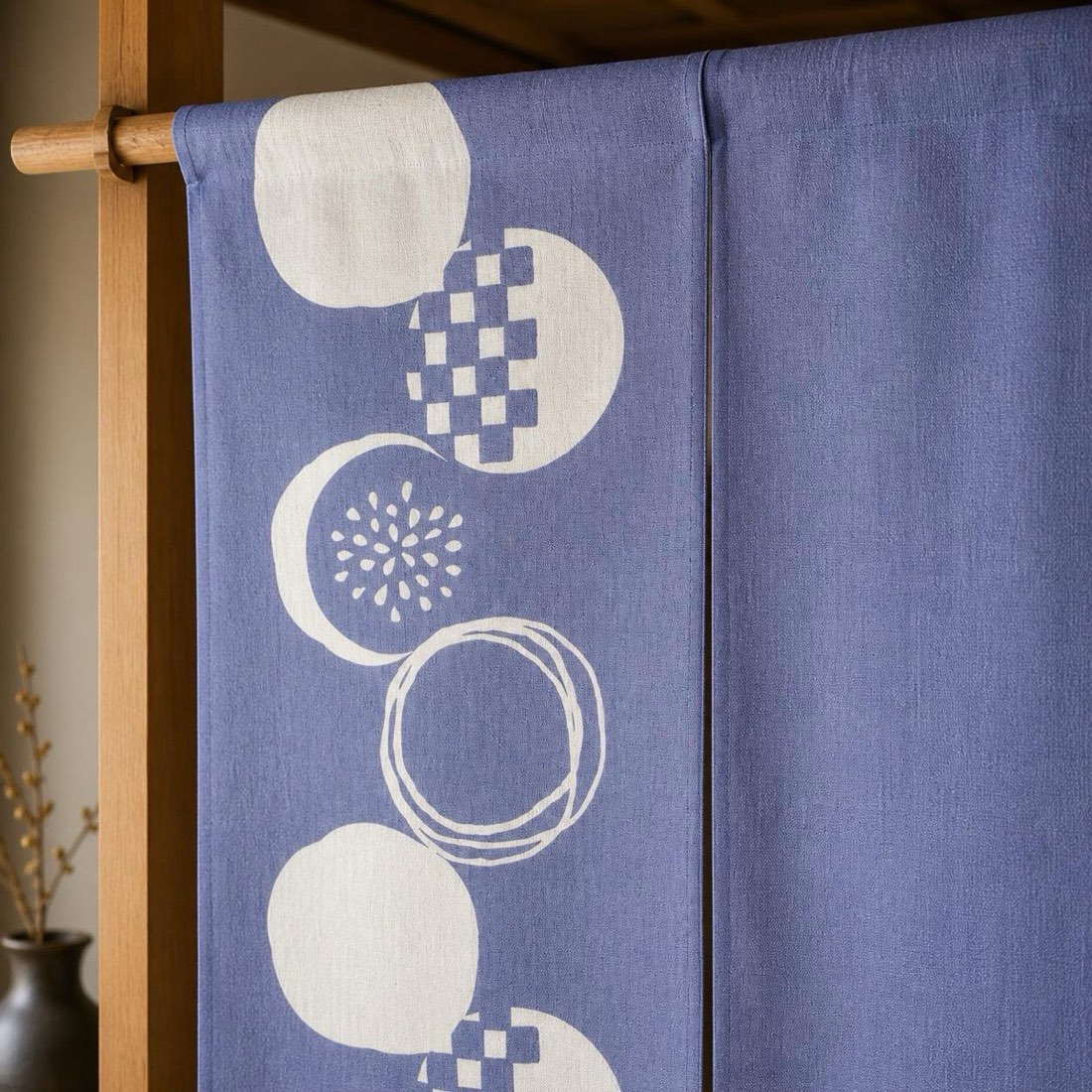
Care for a linen noren by following its care label first, then using cool water, mild detergent, minimal friction, and complete air-drying before it returns to the doorway. Gentle routine care protects the textile's drape and colour, while thoughtful storage helps prevent creases, dampness, and snags.
What Should You Check Before Cleaning a Linen Noren?
Check the care label, fibre content, and any special dye or embellishment before you clean a linen noren. Those details matter more than a general rule: a hand-dyed, lined, or mixed-fibre panel may need a different method from plain washable linen. Also look at the mark itself. A small, fresh spot is usually easier to address locally than a whole panel that has been repeatedly washed. If the noren has a rod pocket, remove the rod first and give the top seam a quick look for loose threads. Decide whether the piece needs cleaning at all; light dust or a small dry mark may call for a gentler first step than a full wash. For the textile's role and construction, start with our guide to what a noren is.
How Do You Keep Everyday Dust Off a Noren?
Begin with the least invasive routine. On a dry day, take the panel down, support it by the upper edge, and give it a gentle shake outdoors or in a well-ventilated place. Letting both sides air briefly can be enough for a textile that only needs refreshing. Do not beat the fabric against a rail, brush it aggressively, or scrape at a mark: friction is the part of cleaning most likely to roughen linen's surface. Keep the panel away from damp storage, cooking splatter, and direct contact with a dirty floor while you work. A regular light refresh lets you postpone washing until it is genuinely needed, which is often kinder to a favourite doorway textile.
Can You Wash a Linen Noren?
Wash a linen noren only when its label allows it. If it does, use cool water and a small amount of mild detergent, then move the fabric gently through the water rather than rubbing or twisting it. Rinse until no detergent remains and press out moisture with clean hands or a towel; do not wring the panels. Treat a new, strongly coloured, or hand-dyed piece with extra caution, since dyes and finishes vary by maker. When in doubt, test a hidden edge with a damp white cloth or ask a professional cleaner before washing the whole textile. Our linen versus cotton noren guide explains why fibre and finish should guide the care decision.
How Should a Linen Noren Dry?
Dry the noren completely before hanging it again or folding it away. After washing, reshape the panel with clean hands, smooth the hems and rod pocket, and hang it in a shaded, airy place according to its label. Avoid a hot dryer and long exposure to strong direct sun unless the maker specifically permits them; both can be hard on natural fibres and colour. Keep the slit or separate panels from overlapping for too long, so trapped moisture can escape. Once the fabric is dry, rehang it on a clean rod rather than forcing a damp panel through dusty hardware. If you are reinstalling the textile, our no-drill hanging guide covers a simple tension-rod setup.
Should You Iron a Linen Noren?
Iron only if the care label permits it and the textile needs it. Linen's natural texture is part of its character, so a few soft creases are not a problem to solve. If you want a neater line, work on the reverse side with a clean pressing cloth between the iron and the fabric. Use the temperature recommended on the label, keep the iron moving, and never press over an unknown print, dye, or painted detail without protection. A lightly damp textile may release creases more readily, but do not use that as a reason to iron a panel that has not been fully cleaned and inspected. The aim is a relaxed, even fall, not a perfectly flat curtain.
How Should You Store a Linen Noren?
Store a clean, fully dry linen noren in a cool, dry place away from persistent sunlight, moisture, and sharp hardware. If space allows, roll it loosely around acid-free tissue or a clean tube so the weight is distributed without creating hard fold lines. Otherwise, fold it along existing seams with tissue between layers, and avoid packing it under heavy objects. Before seasonal storage, remove the rod and check that the pocket, hems, and slit edges are dry and free of loose threads. When you bring it out again, let it air and inspect it before hanging. For a textile with Ojiya Chijimi character, read our Ojiya Chijimi linen story for the craft context behind its textured finish.
When Should You Use a Professional Cleaner?
Choose a professional cleaner when the label calls for it, when a stain is old or oily, or when the noren has delicate paint, embroidery, lining, or an unfamiliar dye. A cleaner can assess the fibre and finish before committing the full panel to water or solvent. This is also the cautious choice for a textile with sentimental or collector value. Photograph the mark before treatment and tell the cleaner what caused it if you know; that gives them useful context without encouraging home experiments. Avoid bleaching, harsh stain removers, and repeated spot treatments, which can create a visible patch even if the original mark fades. A restrained response is usually better than a rushed one.
Where Should You Start?
Start with the care label and the smallest effective step: air the panel, remove dry dust, then clean only when the textile needs it. For a new noren, choose the right size and fabric before it reaches the doorway, then make gentle care part of its routine. Every NeoiAtelier piece is made in Japan and ships from Osaka. Browse the noren and wall hangings collection, and use the noren size guide to choose a panel that suits its intended space.