What Is a Zabuton? A Japanese Floor Cushion Guide
A zabuton is a Japanese floor cushion used to make low seating more comfortable. It can support a tea corner, reading nook, or flexible gathering space when its size, filling, and placement suit the way you actually sit. Start with the floor, the time you spend there, and the room you need to keep usable.
What Is a Zabuton?
A zabuton is a flat Japanese floor cushion. It is different from a backrest, a lounge chair, or a large sofa cushion because its main job is to create a softer sitting surface close to the floor. In Japanese inns and traditional rooms, zabuton are familiar floor seating; in a contemporary home, they can make a low table, a window corner, or a quiet reading spot feel more intentional. The useful idea is not to recreate a room from a photograph. It is to give one floor-level activity a comfortable, clearly defined place. A zabuton can be one part of that arrangement, alongside a rug, a low table, or a simple tray, without requiring the rest of the room to become dedicated floor seating.
Where Does a Zabuton Work Best?
A zabuton works best where floor sitting already has a clear purpose. That might be a low tea table, a reading corner where you sit for a short pause, or an extra seat brought out when friends visit. Begin with an area that has enough open floor around it for sitting down and standing up without knocking into furniture. Keep a path through the room clear, especially in a compact apartment. Floor seating is not equally comfortable or practical for every person, so treat it as an option rather than a replacement for chairs. If you expect a long session or need more support, use a seat with a back or choose a different setup. A cushion should make the room easier to use, not pressure anyone into a posture that does not suit them.
How Should You Choose the Size?
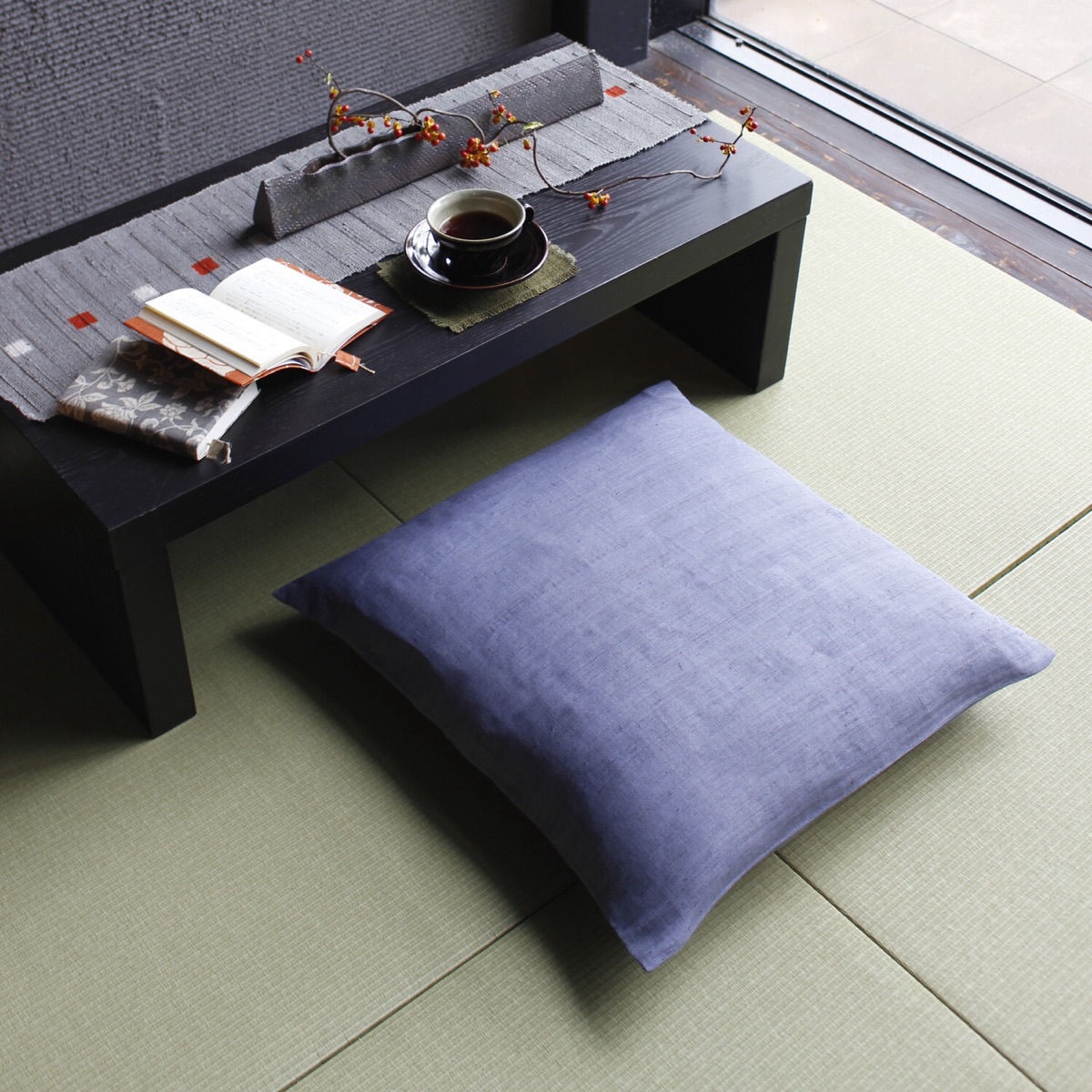
Choose the size by the person, the floor area, and the cushion's intended role. NeoiAtelier's flat linen zabuton covers use a 55 by 59 cm, or 21.7 by 23.2 inch, Meisen-standard format, while its compact tea cushions measure 42 by 45 cm, or 16.5 by 17.7 inches. Those are different scales for different uses, so compare the listing rather than assuming the word zabuton means one universal size. A larger floor cushion can give more room for a seated posture, while a smaller tea cushion may suit a focused corner or a decorative layer. See the blue-wisteria linen zabuton cover for the full 55 by 59 cm dimensions and product-specific details before choosing a cover or cushion.
What Is the Difference Between a Cushion and a Cover?
A zabuton cushion and a zabuton cover are not interchangeable products. A cushion includes the padded form you sit on; a cover is the textile layer designed to fit a compatible insert. That distinction matters before you buy, because a beautiful linen cover cannot provide padding on its own. Check whether a product is sold as a filled tea cushion or as a cover, then confirm the listed measurements against the cushion you already have or intend to use. It is also worth considering maintenance before choosing a color or motif. A removable cover can make it simpler to refresh a seating corner, while a filled piece may be the more direct choice when you want a complete small cushion. Let the product description decide the setup, rather than relying on a general image or category name.
How Can You Style a Zabuton in a Modern Room?
Style a zabuton as one quiet layer in a room, not as a signal that every object must follow one theme. A plain linen cover can sit on a wood, tile, or tatami floor; a patterned tea cushion can give a low table or reading nook one point of color. Leave enough empty floor around it for the shape to read clearly. When a room already has a lot of pattern, a restrained cover may be the easier fit. When the surrounding surfaces are simple, a hand-dyed motif can be the focus. Browse the noren and textiles collection to compare linen pieces by scale and role, then choose only the textile that has a real place in the room.
Can a Zabuton Support a Tea Corner?
Yes. A zabuton can support a tea corner when it gives a person a comfortable place to sit beside a low table or tray, without crowding the objects used for tea. Keep the arrangement modest: one seat, one clear surface, and enough room to move safely. A yunomi, tray, or small ceramic object can make the area feel considered, but the seating should still be easy to put away or reposition when the room needs to serve another purpose. The same principle works in a reading corner: decide whether you want a brief floor-level pause or a longer place to settle, then match the cushion and any extra support to that reality. For a simple, flexible setup, read our Japanese tea corner guide before adding more objects than the space needs.
How Should You Care for a Linen Zabuton?
Care begins with the specific item rather than a generic rule for all linen cushions. Check the product listing for its material, whether it is a cover or filled cushion, and any handling guidance from the maker. In daily use, keeping a zabuton away from food spills, direct sun, and damp floors will help it remain a useful textile rather than a difficult maintenance project. If the piece is decorative as well as functional, avoid treating it as an extra throw pillow that is moved between every surface. Give it a consistent place and put it away when it is not useful. Every NeoiAtelier piece is made in Japan and ships from Osaka. Explore the noren and textiles collection to find a linen zabuton whose size and role fit the space you actually use.