Japanese Gifts for Incense Lovers: 6 Thoughtful Ideas
The best Japanese gifts for incense lovers make their ritual easier without guessing at a fragrance preference. Start with a Kutani koro for someone who already burns stick incense, or a low-smoke gift set for a beginner. Add a tea cup, textile, or fan only when it supports their home rather than crowding it.
What Makes a Japanese Incense Gift Thoughtful?
A thoughtful Japanese incense gift begins with the recipient's existing routine. Someone who lights incense at the end of the day may appreciate a useful vessel, while someone who is curious but new to it may prefer a simple, approachable set. The strongest choice has one clear role: it holds incense safely, gives a shelf a point of interest, or helps create a short pause before another daily habit. It does not need to turn their home into a themed room. Avoid treating fragrance as a personality test; scent is personal, and a carefully chosen object can be more lasting than a large assortment. When you know little about the recipient's home, choose a smaller piece that is easy to place, explain, and enjoy.
Is a Kutani Koro the Right Gift for an Incense Lover?
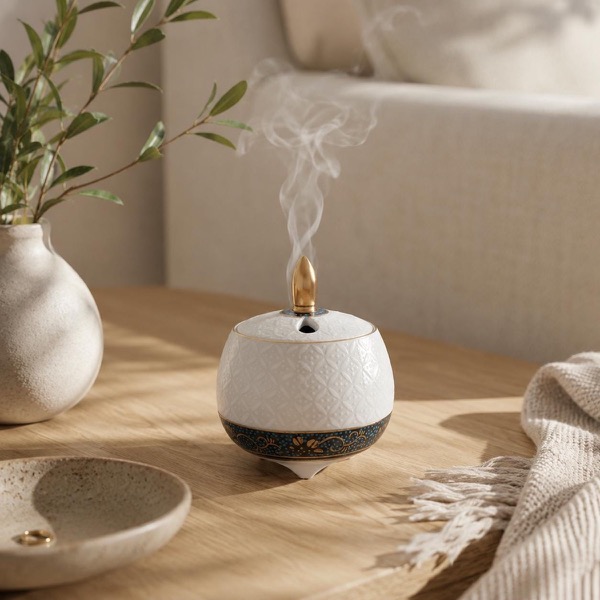
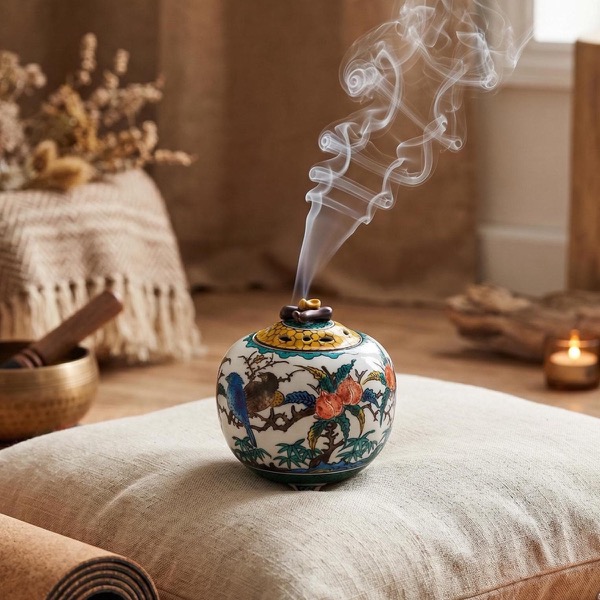
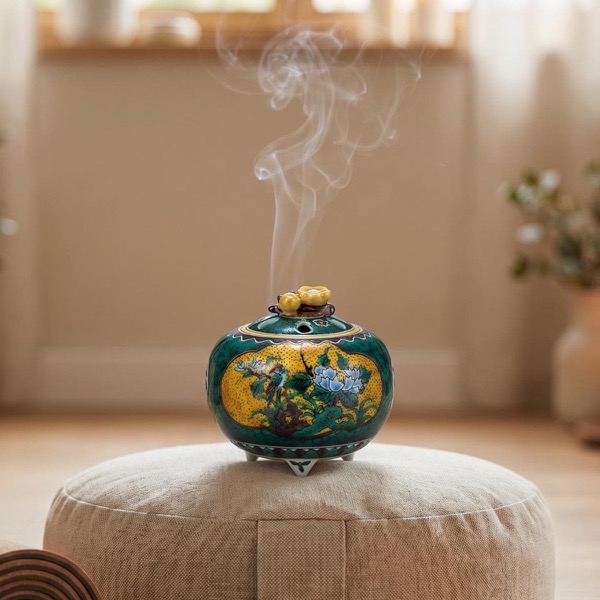
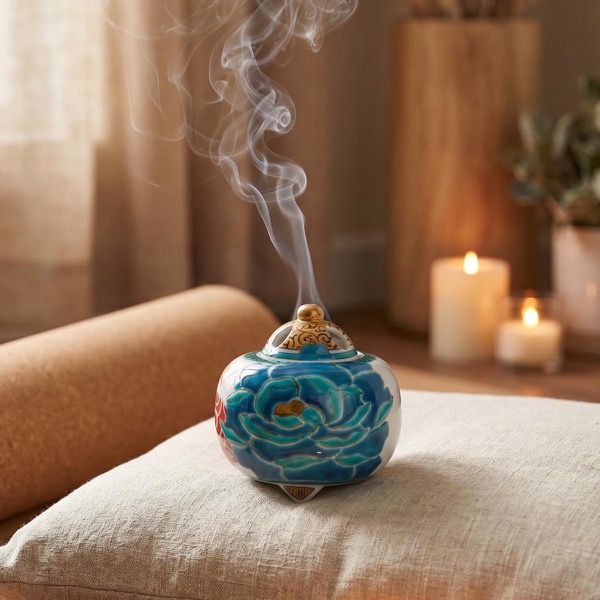
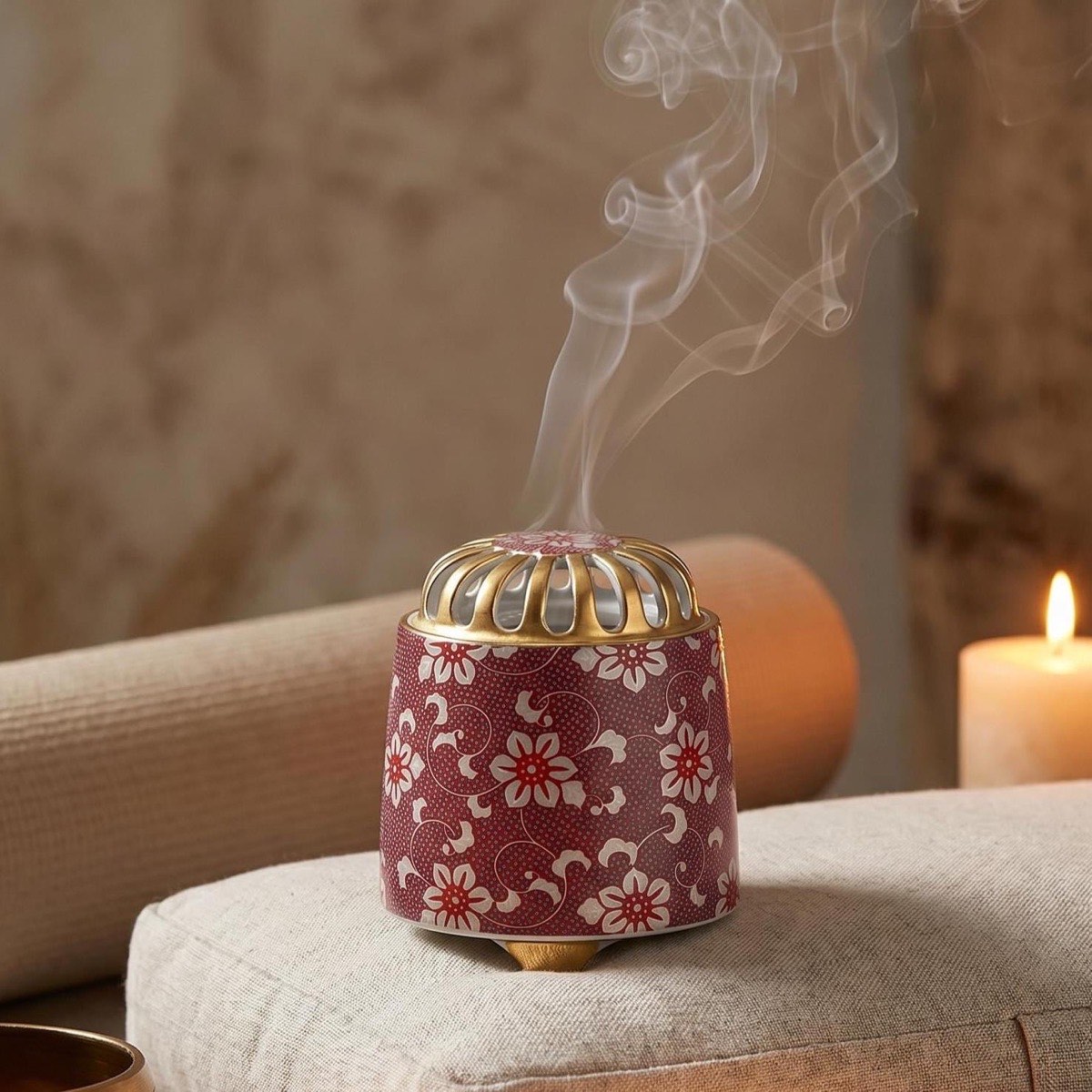
A Kutani koro is a strong gift for someone who already enjoys incense or collects porcelain. Kutani ware has been made in Ishikawa since 1655, and a hand-painted koro can be appreciated as a decorative object between uses. It is not the safest default for every recipient, because burning incense requires a stable, heat-resistant surface, ventilation, and attention while it is lit. Choose it for a person whose routine and taste you know, rather than for someone who simply likes a pleasant-smelling room. Before choosing, browse the Japanese incense collection and read the guide to using a Japanese koro so the gift matches the way they burn incense.
When Does a Low-Smoke Incense Set Make More Sense?
A low-smoke incense set can make more sense when the recipient is new to incense, lives in a compact home, or prefers an easy first step. A simple set is less of a commitment than a large fragrance collection and leaves room for the person to learn what they enjoy. It still needs the same sensible habits: use a stable, heat-safe surface, keep it away from paper and fabric, ventilate the space, and never leave it unattended. That practical context is part of a considerate gift, not an extra burden. The low-smoke Japanese incense gift set is a useful starting route, while the wider collection helps an experienced recipient compare vessels and accessories.
Which Supporting Gift Works With Incense?
Choose a supporting gift only when it fits a familiar part of the recipient's home. A yunomi suits someone who often makes tea before or after a quiet evening; a linen textile can soften a nearby doorway or wall; and a fan can add one light visual accent without taking up a shelf. These objects should stay separate from the burning area, especially textiles and paper-like materials. The aim is not to build a kit of unrelated Japanese objects, but to choose one main piece and, at most, one companion. Browse the Japanese tea cups collection, the noren and textile collection, or the Japanese fan wall decor collection when you know which part of their routine matters most.
What Should You Avoid When Giving Incense?
Avoid assuming that every person wants a strong scent or a complicated burner. A large incense assortment can be difficult for someone who is sensitive to fragrance, while an ornate vessel may not suit a home you have never seen. Skip anything that requires special hardware, permanent installation, or a specific display surface. It is also wise not to pair incense with a crowded tray of accessories just to make the present appear bigger. One well-made object with a clear job is more useful than several competing pieces. If you are uncertain, a small gift that the recipient can place safely and use on their own terms is the more generous choice. The gift should invite a calm moment, not create another item to store or manage.
How Do You Choose Without Knowing Their Favorite Scent?
Choose by how the person uses their home rather than by trying to predict an exact fragrance. For an experienced incense lover, a koro can be an enduring craft object and a practical part of an established ritual. For someone who likes quiet evenings but has not used incense often, a modest low-smoke set may be easier to try. For a person who prefers objects over fragrance, choose a tea cup, linen textile, or fan instead and let the scent remain optional. Notice whether they collect ceramics, make tea, decorate a shelf, or enjoy a soft room boundary. Those habits tell you more than a general idea of Japanese style. Good gift selection is specific, but it does not need to be elaborate.
How Can You Build a Small Japanese Incense Gift?
Build a small Japanese incense gift around one main object and one supporting choice at most. A koro and incense suit a known enthusiast. A low-smoke set can stand on its own for a beginner. A koro plus a tea cup works when the recipient already has a quiet evening ritual, while a textile or fan makes more sense when they enjoy arranging their space. Keep the pieces physically separate while incense is in use, and include only the practical context the recipient needs. Every NeoiAtelier piece is made in Japan and ships from Osaka. For broader browsing, compare the Japanese gifts collection with Japanese gifts under $150, then choose the object that fits the person rather than the trend.
Where Should You Start When Buying?
Start with the recipient's level of familiarity. Choose a Kutani koro for a known porcelain or incense enthusiast, a simple low-smoke set for someone beginning a ritual, and a tea cup, textile, or fan when fragrance would be too personal. The Japanese incense collection is the clearest starting point, because it lets you compare the craft object and the practical use before selecting one thoughtful piece.