How to Clean a Japanese Incense Burner (Koro)
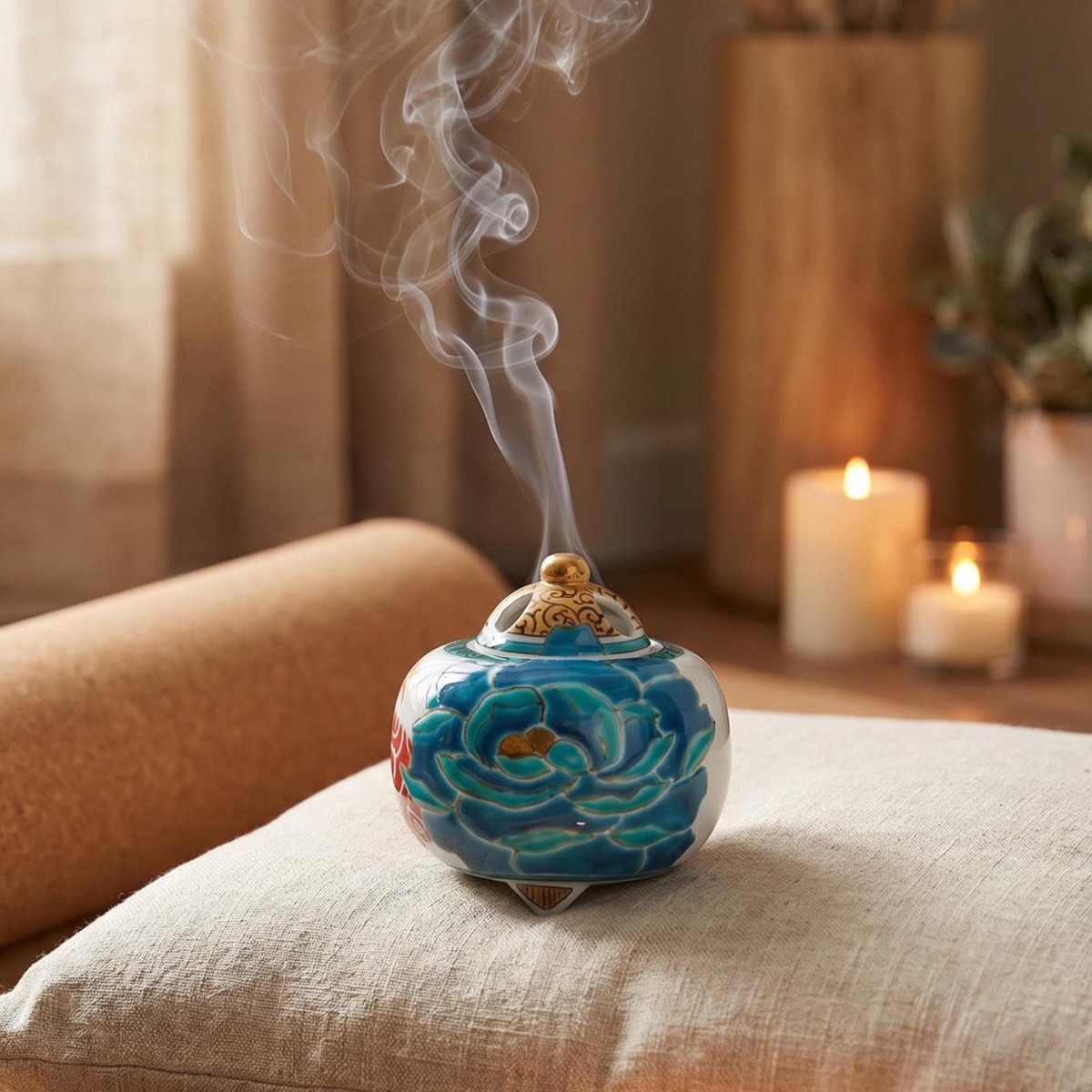
To clean a Japanese incense burner, let it cool completely, tip out the loose ash, then wipe the interior with a barely damp cloth and a single drop of neutral detergent. Dry every surface fully before the next use. For Kutani-ware koro, avoid soaking and sudden temperature changes, which can crack the delicate overglaze.
How Do You Clean a Japanese Incense Burner?
Cleaning a koro takes about five minutes and almost no equipment. Wait until the burner is fully cool, then empty the spent ash and any incense stubs into the bin. Wipe the inside with a soft cloth dampened with water and one drop of neutral dish soap, reaching into the smoke channels with a cotton swab. Rinse the cloth, wipe again to lift the detergent, and dry with a lint-free towel. Never put a porcelain koro in a dishwasher, and never scrub the painted exterior with abrasives - the hand-applied overglaze colors sit on the surface and dull if you grind at them. Work over a soft towel rather than a hard sink, and remove rings or watches that could knock the rim while you handle the piece.
What Do You Need to Clean a Koro Safely?
You almost certainly own everything required: a soft lint-free cloth, cotton swabs, a small soft brush or an unused toothbrush, neutral dish soap, and a fine strainer if you burn in ash. Skip steel wool, scouring pads, and harsh solvents entirely. For pieces finished with gold or silver leaf, even baking soda should stay off the decorated surface and be used only on the plain interior. Keeping one dedicated cloth for your burner means no perfume or cleaner residue ever transfers to the incense bed.
How Often Should You Clean a Koro?
Clean lightly after every few burns and deeply about once a month. If you burn sticks in ash, stir and level the bed each session, and sift it with a fine tea strainer every two to three weeks to remove burnt fragments, which keeps the ash breathing and the smoke even. A burner used daily for meditation benefits from a monthly wipe-down; an occasional decorative piece can go longer. The rule of thumb: lift visible residue before it bakes onto the glaze, because fresh soot wipes off easily while aged buildup needs soaking. If you switch between scents - say a sharp citrus incense and a soft sandalwood - empty and wipe the bed first, or the old fragrance will shadow the new one for a session or two.
How Do You Remove Ash from an Incense Burner?
Tip the loose ash into the trash, then tap the rim gently to release the rest - resist banging the foot, which is the most fragile part of a thin porcelain koro. Keep the ash bed no more than 80 percent full, roughly two inches deep, so air can circulate under the incense. If you use sand or rice-hull ash, top it up rather than replacing it wholesale. Our Kutani-ware incense burners are sized for stick, cone, and trail incense, with the ash depth we recommend listed on each piece.
What Is the Safe Way to Wash Kutani Porcelain?
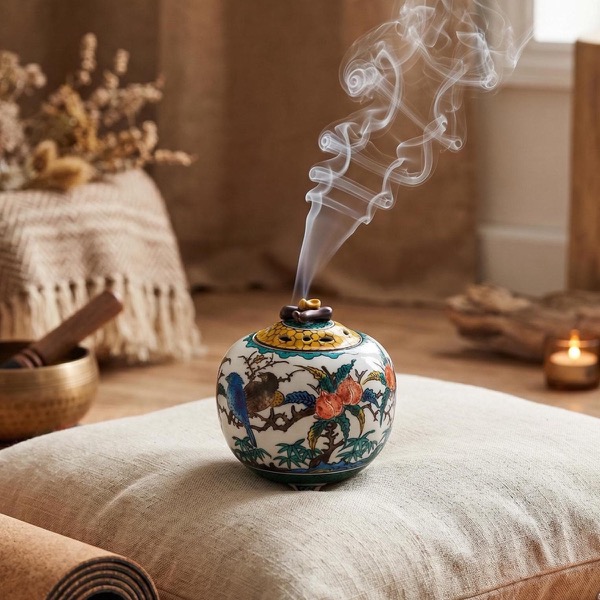
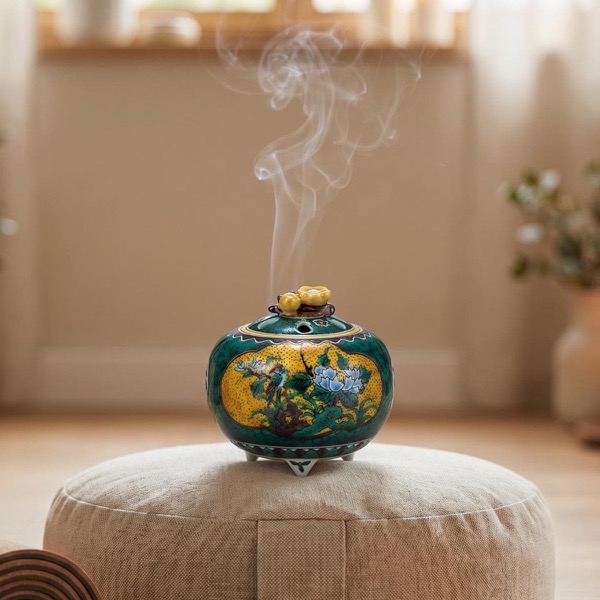
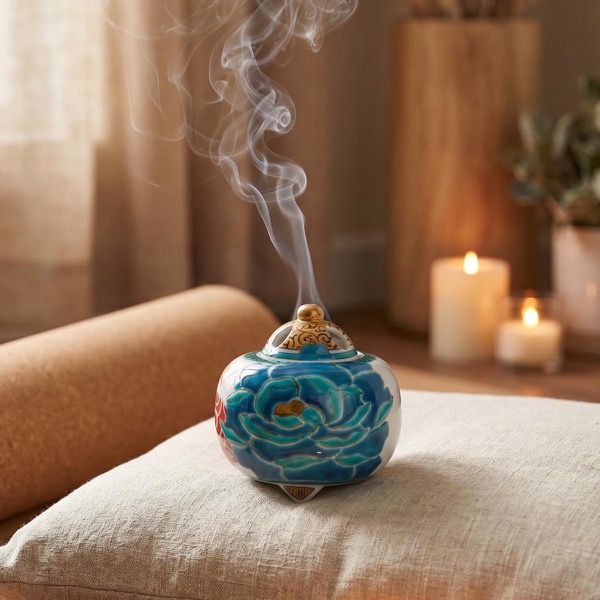
Kutani ware has been fired in Ishikawa since 1655, and its signature gosai five-color overglaze is exactly what you are protecting. Wash by hand in lukewarm water - never boiling, never ice-cold straight from the tap - because thermal shock is the fastest way to craze or crack porcelain. Let the piece reach room temperature before and after washing, and skip vinegar and bleach on gilded or silver-leaf pieces. If you are choosing a first burner, our Japanese gifts under $150 include several easy-care Kutani koro.
How Do You Prevent Cracks and Stains?
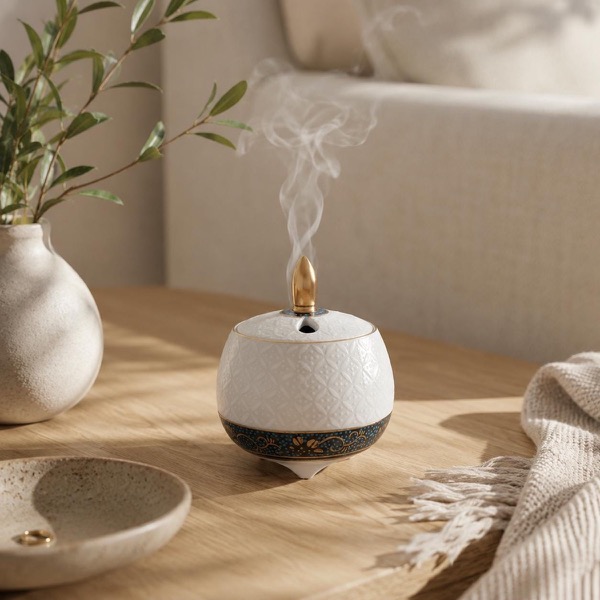
Most koro damage comes from heat and haste, not from the incense itself. Let a charcoal or trail burner cool fully before handling, and set the koro on a coaster or trivet so heat and oils never reach your furniture. Store it away from direct sun, radiators, and damp, which warp lids and fade pigments over years. For stubborn resin stains inside the bowl, a paste of baking soda and water left ten to fifteen minutes lifts residue without scratching - then rinse and dry. A smooth classic shape like our Kutani sakura porcelain koro stays easy to keep clean.
How Should You Store a Koro Between Uses?
Keep the lid on. On a Japanese koro the pierced lid is designed to cover the ash bed between sessions, keeping dust out and the interior tidy. If the burner arrived in a kiri paulownia box, store it there - the wood buffers humidity. Wrap delicate gilded pieces in soft cloth rather than newspaper, whose ink can transfer. A well-kept koro is a lifetime object: many Kutani burners are handed down for generations precisely because the porcelain and overglaze hold up when given this small amount of care. Check the lid pierces are clear of soot now and then, since blocked vents make incense smoke pool and smolder unevenly.
Where Can You Find a Burner Worth Keeping?
Treated this way, a single burner can anchor your incense ritual for decades. Every NeoiAtelier piece is made in Japan and ships from Osaka, hand-selected by our curation team, so the koro you clean tonight is the same one a kiln in Ishikawa finished by hand. Browse the full range of Japanese handcrafts to find a koro built to last.